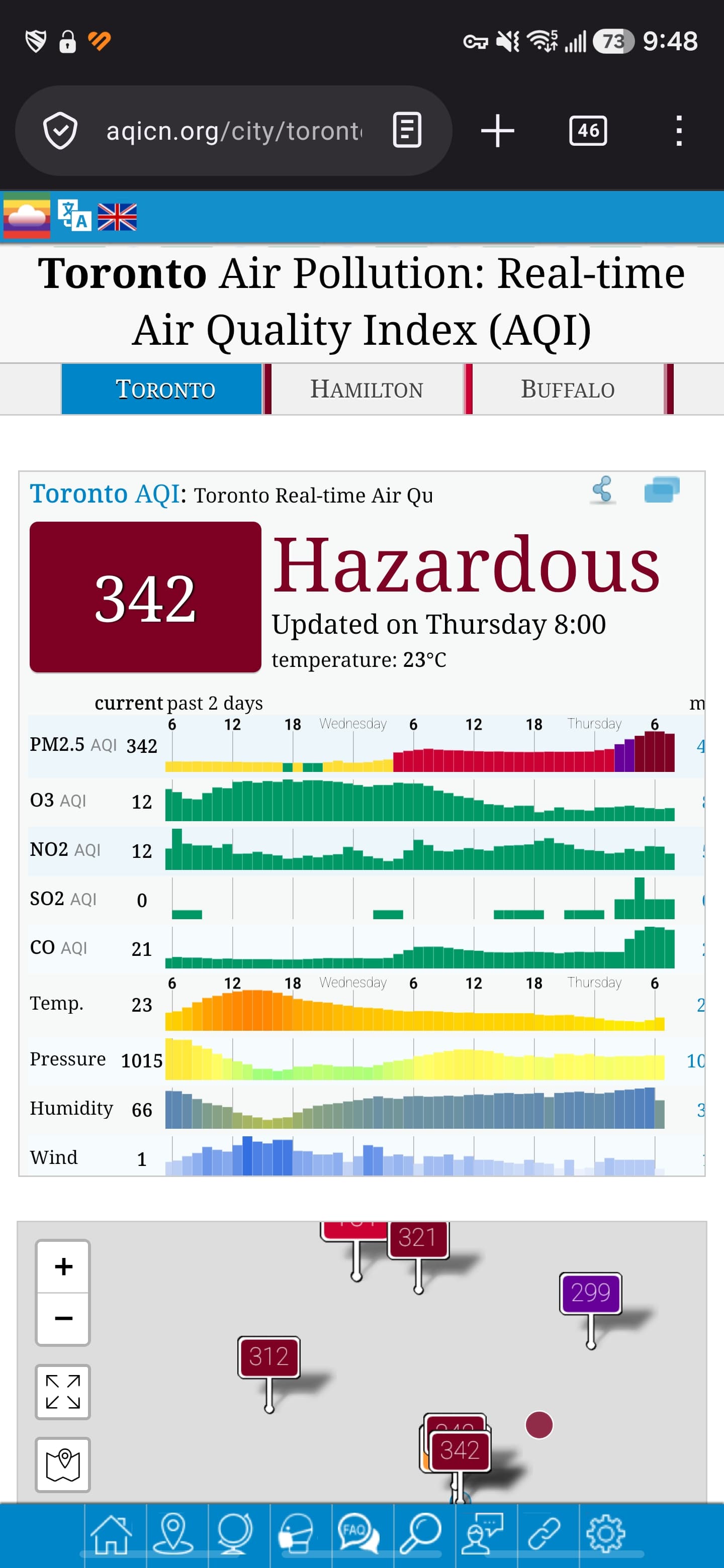
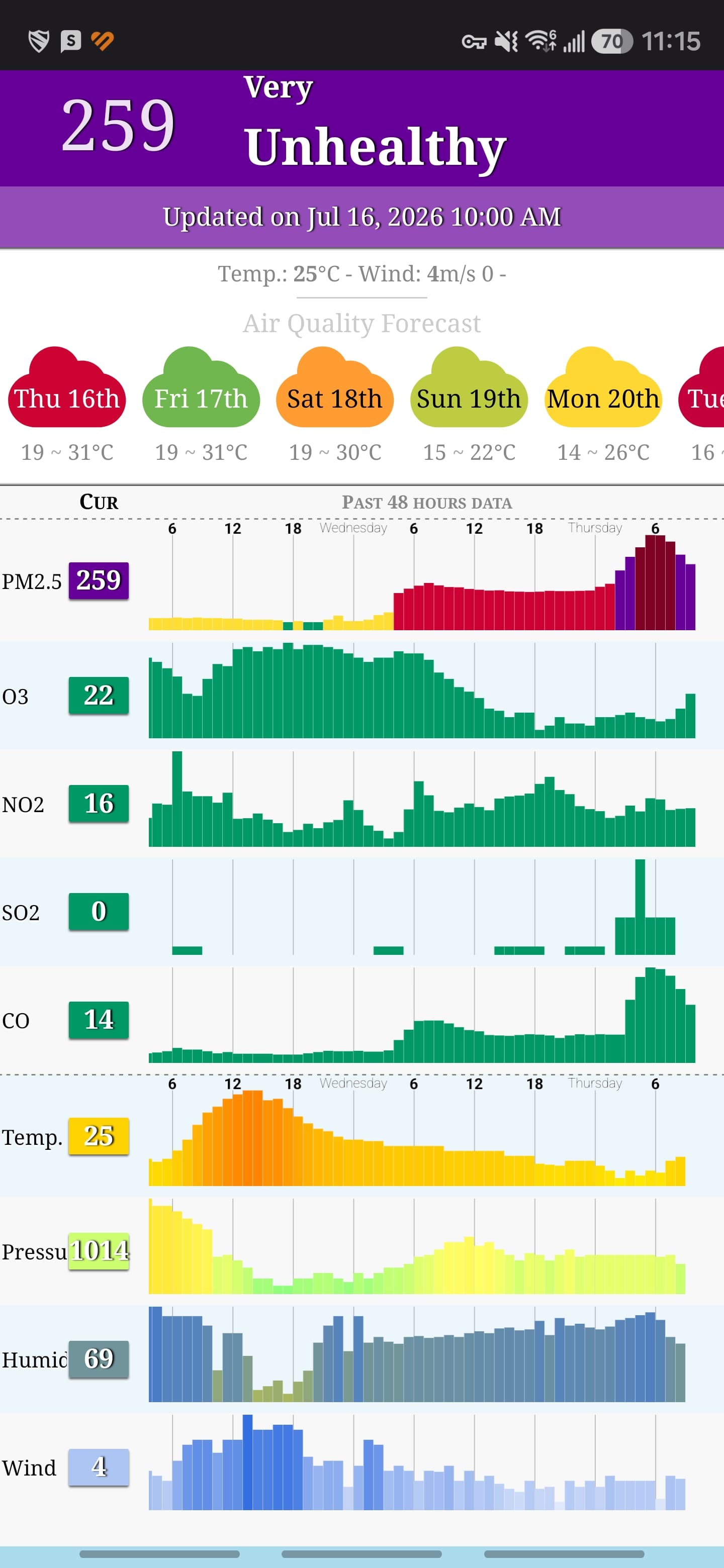
Slight less orange but the pollution is a lot worse today in Toronto.
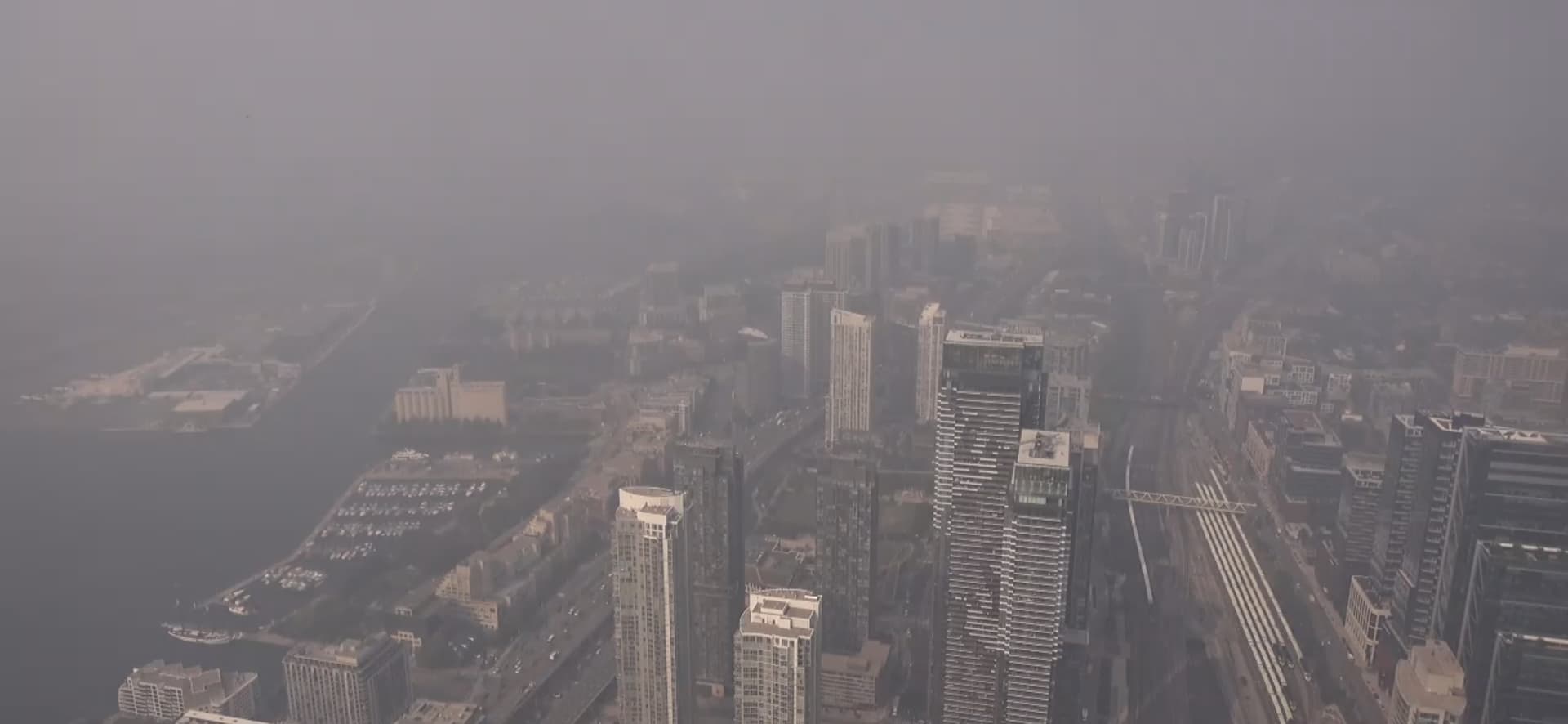
Air quality index. 
A lot worse than yesterday ? Wow
If I remember correct, the AQI was slightly lower yesterday. Then again, my memory is really not what it used to be.
Just looked it up. PM2.5 is a lot worse today than yesterday, but it’s a tiny bit better than earlier this morning (not really that comforting though)
Early indications that the El Nino in the autumn will be incredibly strong, with most modelling predicting that it will be the strongest ever, certainly the strongest for which we have any data at all.
That will mean that the fire season in Western Canada in 2027 will be at least as bad as 2023.
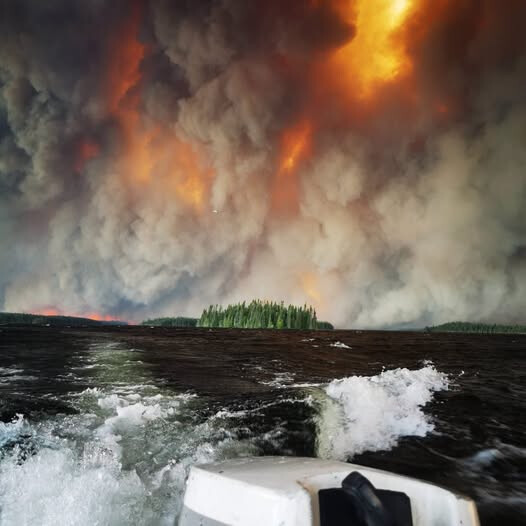
Goddamn…Collins, Ontario…is gone
A resident fleeing with his family by boat took this photo
Collins is about 30km due west of Armstrong, where the train video above was taken.
That is absolutely insane. I’m familiar with the fire cycle here and the by now familiar management of them. The buildup of fuel is relatively slow and requires a very good growth season or seasons before becoming something potentially scary. Fires are burned constantly in and around rural areas to burn of moribund material as well as to creat firebreaks because obviously one simply can’t burn off willy nilly. In protected wilderness areas controlled burns of blocks are managed season after season to mimic what the ecosystem has adapted to over the eons as water scarce region for extended periods of time as well as to avoid catastrophic wildfire events. It’s also important to note that these are conducted in various manners of slow and hot burns as these affect grasses and woodland differently. Anyway, these have their critics but generally it’s keyboard warriors whose instinct is ‘Fire! Bad!’.
Now obviously Canadian ecosystems are extremely different with highly forested areas to which we have no real comparison and it’s only perhaps wildfires in the Cape that come anywhere remotely close to serious major property damage and possible loss of life. There seems to be massive tracts of forest going up year after year so one would assume the region is becoming drier and hotter over time. I can only imagine that the landscape itself is changing to an extent as a result of these fires? We’re in an environment here adapted to fire and everything generally bounces back with the rainy season but what is the effect on slow growth forest systems with such relatively constant and destructive fires that would ordinarily be spaced further apart?
My Canadian friends, hope you all are safe, and well. 

Obviously pretty much every conversation in the UK in the past month has hit upon the weather.
At my son’s birthday party the other week, I was speaking to one of the mums, her sister is a marine scientist.
The gist of the conversation was…for all the pissing and moaning here atm, no UK summer will in the future ever be as cool as this one.
I remember looking at surf-forecast.com way back in March this year. Sea temps were 1.5deg higher than average then.
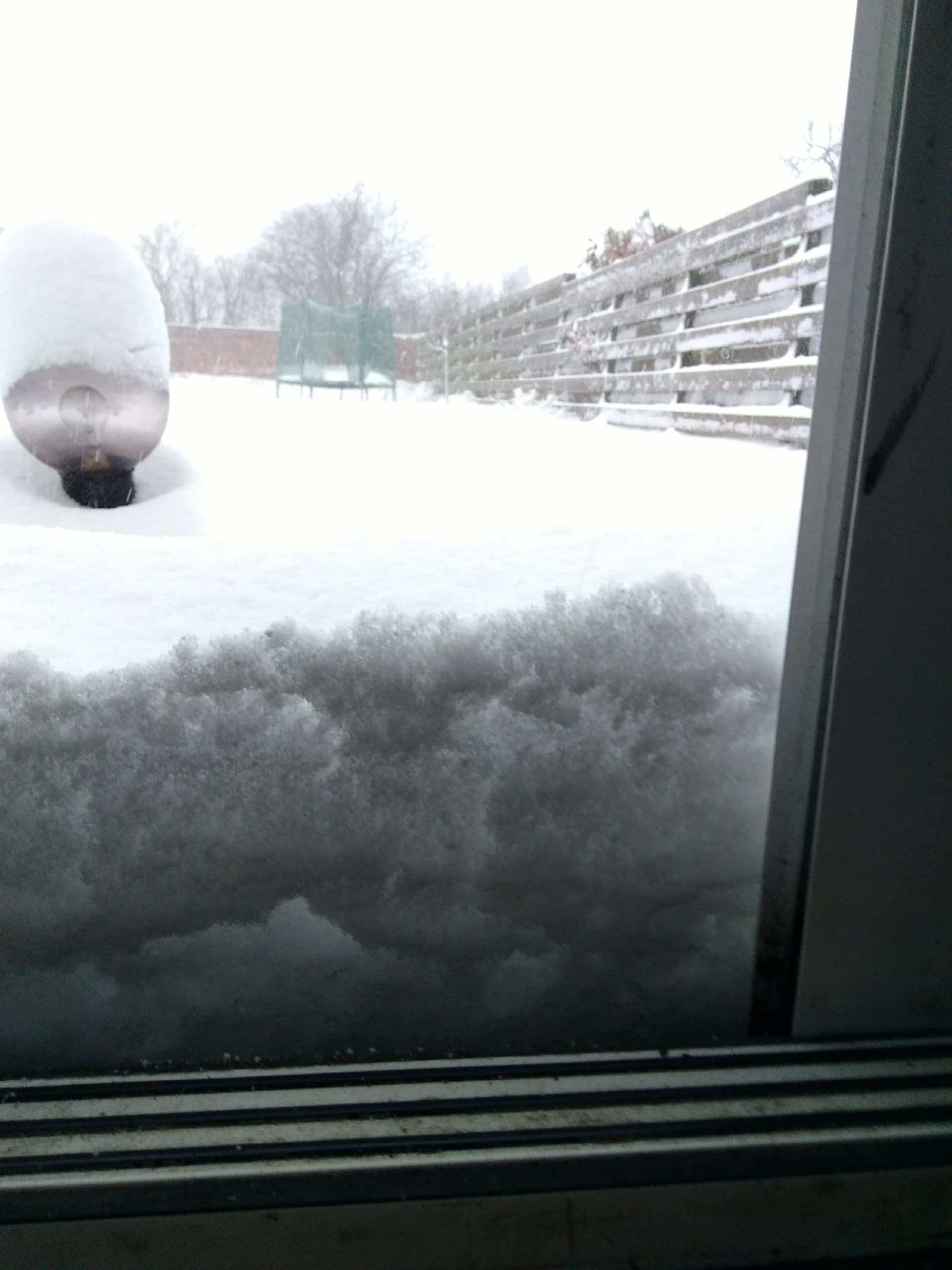
3feet of snow fell in Chile yesterday.
Is that a lot for this time of year? It is the middle of winter.
Not sure but that amount of snow in 24hrs is pretty intense anywhere.
Yes, i was thinking that there must have been a lot of water in the atmosphere to dump that amount of snow.
By comparison, that’s what 2 feet of snow looked like in Scotland in 2018.
While it is a lot of snow, it is really in the Andes that they are seeing it. There was no real snow in Santiago. May have saved the season for some of the ski resorts
Isn’t that true of every month?
They’ve had 2.6m of snowfall in 5 days. In resort obviously.
Yes, I used to walk the dogs around there. One of them used to duck when the blades came around! I think they have a visitor’s centre there, but it’s worth a visit just to get an idea of the scale of these things. When you see them from a distance, they look like a child’s toy, but up close they are really quite intimidating. They are mostly silent apart from a swoosh as the blades go around, but the blades actually travel very fast.
It’s an important point, though. There is constant clamour for new wind farms, but there is probably as much to be gained from upgrading existing sites which will already have the infrastructure in place.
Most of the turbines there are smaller than what became the 80 meter standard (65 m). Repowering with 250m units will about halve the number of turbines and almost double output