Sorry to lower the tone, but the Missus just asked me “What time are Livvo playing?”, thus proving herself indelibly Aussie.
There is no hope 
Sorry to lower the tone, but the Missus just asked me “What time are Livvo playing?”, thus proving herself indelibly Aussie.
There is no hope
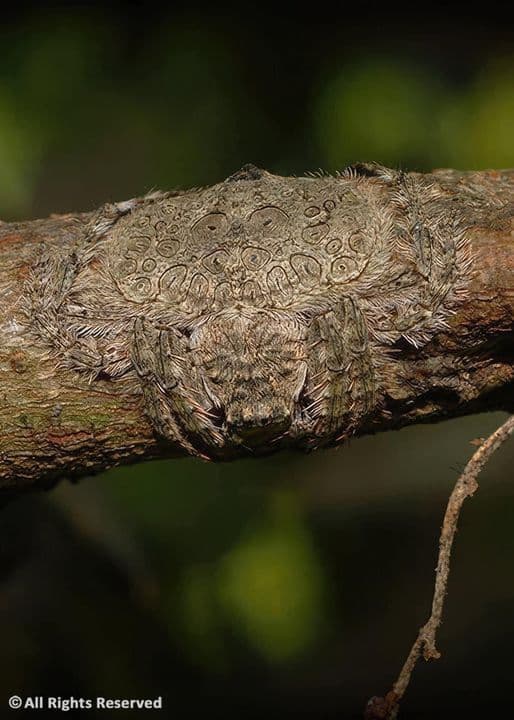
The Wrap-around Spider, indigenous to Australia, can flatten and wrap its body around tree limbs for camouflage.
Beautiful 
A more vicious name and it would be invincible. Like ’ You can’t see me fucker’ Spider. Wrap Around Spider sounds like a child toy.
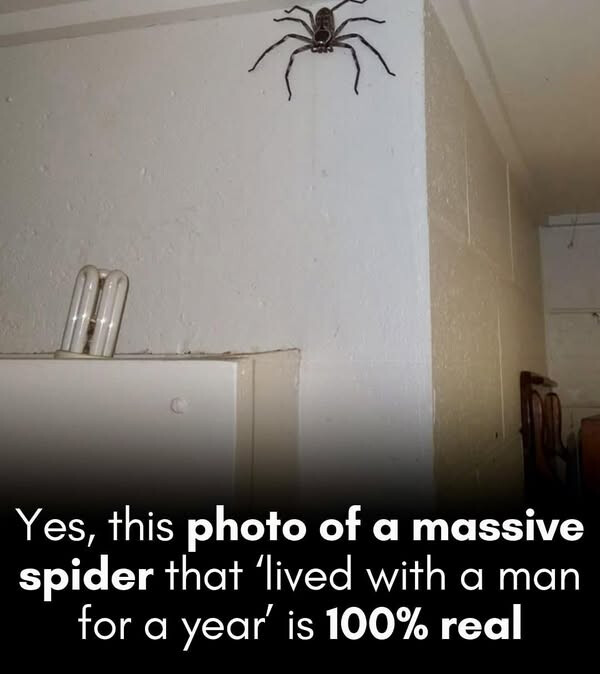
This banded huntsman spider - whose leg span reaches almost 12 inches - has lived with a family in Australia for over a year.
She’s been living freely with the Gray family but, rather than reaching for a can of insect-killer, homeowner Jake Gray and his family have embraced Charlotte as a helpful housemate.
“We’ve been watching her grow,” he said in a Facebook post - adding that he hopes she gets even bigger.
Despite her intimidating size, Charlotte is harmless to humans and plays a valuable role as a natural pest controller, feeding on insects and even small geckos. In a world quick to squash or spray, the spider offers a surprising lesson in coexistence.
Brilliant.
Can’t see the Missus accepting it though
I am glad spiders can’t swim this far
I usually drop off a couple on my way through Changi.
I saw a few spiders that have big ugly hair. So that’s from you. Bastard.
:0)
:0) 
Whoops!
:0)
Come on, below 20 is cold  .
.
It certainly is if all you do is lie on your back.
Don’t understand this, can you explain if there is some context?
A world of wonder awaits you 
There are many reasons why it is difficult to prevent fires eh…
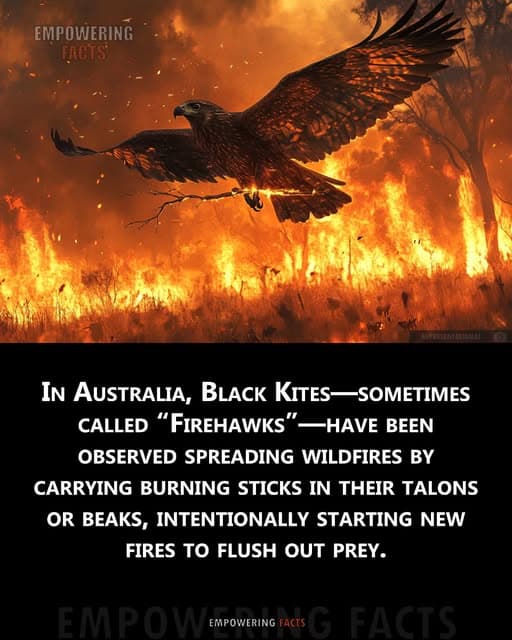
Black Kites (Milvus migrans), along with other raptors like Whistling Kites and Brown Falcons, have been documented exhibiting fire-spreading behavior in parts of northern Australia. Indigenous fire managers and field researchers have reported that these birds pick up smoldering sticks from active bushfires and drop them into dry grassland or scrub areas not yet burning. This behavior appears to be a hunting strategy, designed to flush small animals like rodents, insects, and reptiles out of hiding.
The phenomenon, though not widespread globally, has been recognized through field observations and oral histories from Aboriginal communities, particularly among fire-savvy groups in the Northern Territory. These accounts were later supported by ecological studies published in peer-reviewed journals, which detail coordinated behavior among raptors during fire events.
The birds often wait near fire lines and take advantage of prey attempting to escape. By extending the fire’s reach with smoldering twigs, they effectively expand their hunting zone. While the action seems deliberate, scientists are still cautious about defining the behavior strictly as tool use, though it aligns closely with some definitions of it in animal cognition research.
This behavior is one of the few known examples of animals manipulating fire in the wild, and it has drawn international attention for its implications in both ecology and the study of animal intelligence.