Not what I think, as it’s dangerous for them). The slack is because of weakness and fear of social uprising, not because of the defeat per see. Well it is an indirect consequence because of the defeat, but they don’t not enforce morality code to be nice,but because of fear of protests and instability. They sense the mood.
They’ll probably relax the rules during a while, a few months or so, until they get a grip on the country again, and then they’ll crack down on all these poor youngsters. It wouldn’t be the first time, these horrible leeches have form for this.
Still, life always comes to the fore again, but I don’t dare thinking about what they’ve done and surely will continue to do to these young people who want to have a life outside of their narrow system of belief .
Words dont matter. Peace deal and ceasefire are things we just get to say in a press conference but have no actual meaning when it comes to this conflict
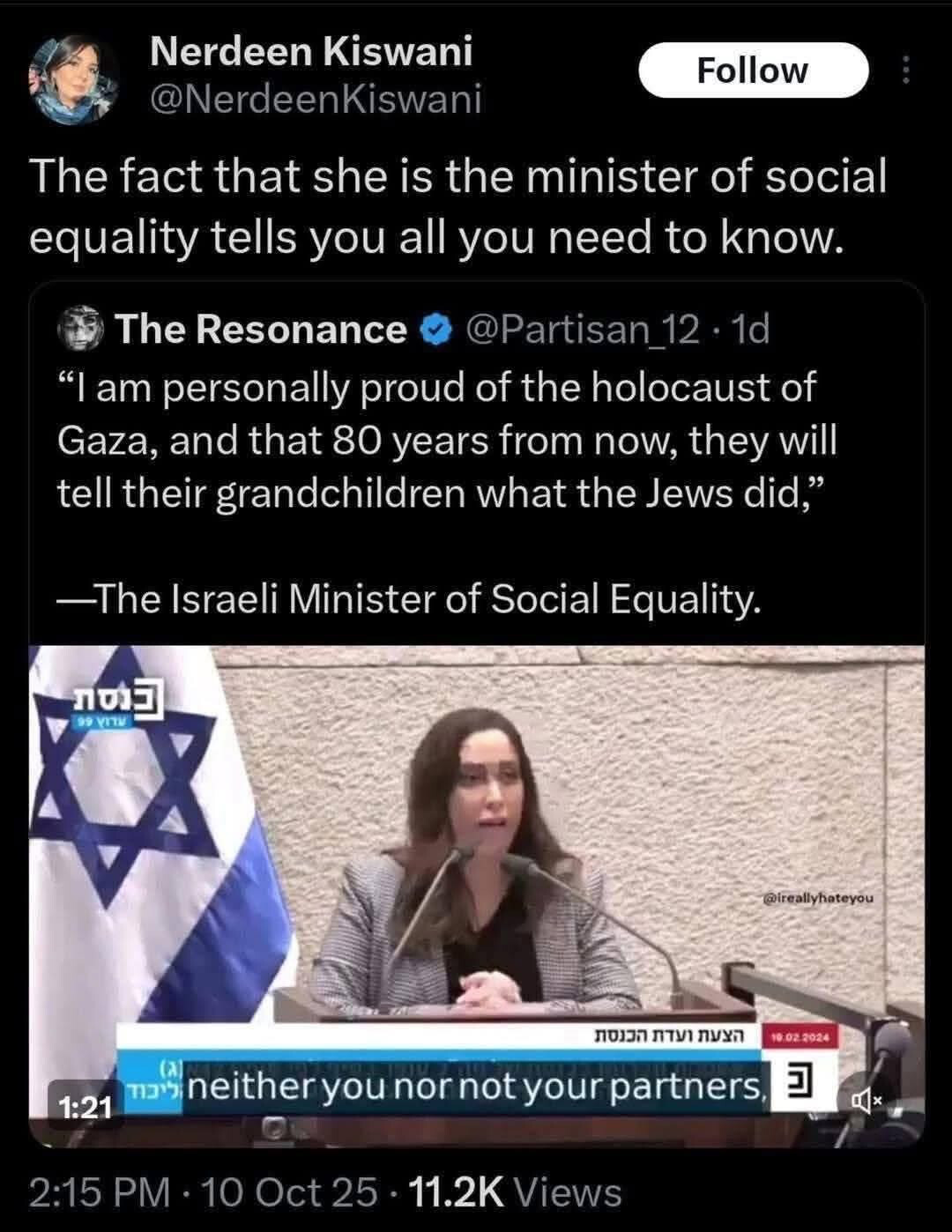
The remarkable point about that is that here, using the word ‘holocaust’ to describe what Israel has been doing in Gaza has been characterized as anti-Semitic - including by some Jewish critics of Israel.
I fear Israel has now done incalculable damage to the place of Judaism in the world.
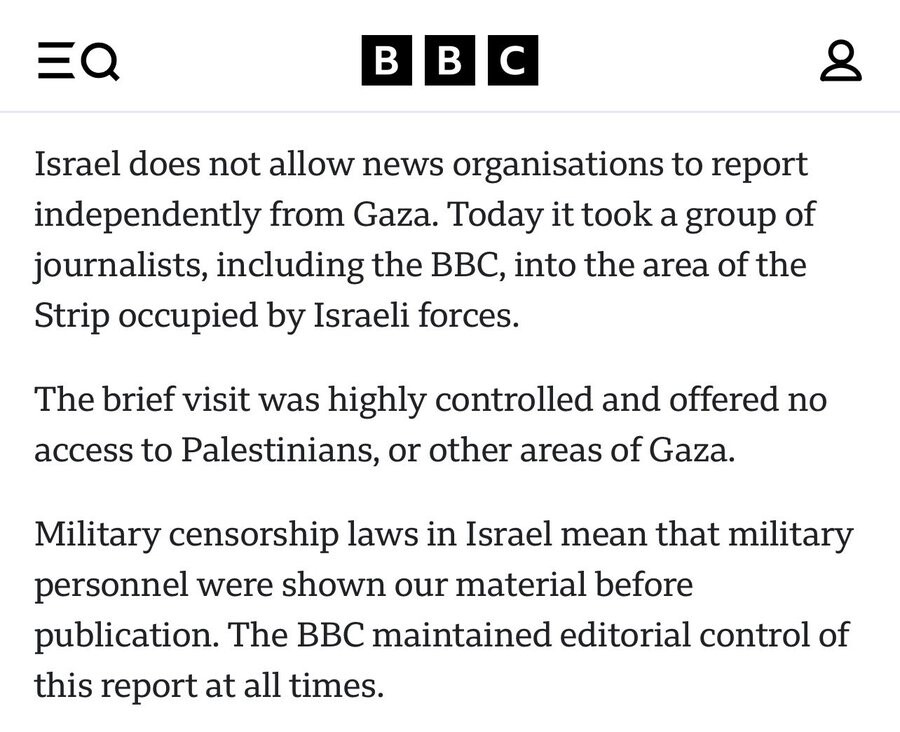
Military censorship is normal, but the rest of it is absurd and shows how little value these controlled trips have for journalism.
The value they have, is that you can write about how Israeli soldiers live in the field and how their lives are when stationed at checkpoints, how they experience patrolling and how they live in forward bases (if that’s an interesting story, which I strongly doubt it is for international media).
The other value it has, is that international media can write about lack of access to Palestinians to talk to, which I suppose, is actually a valuable story in itself.
But if International media were allowed to just talk, unsupervised, with Palestinian civilians, making them anonymous; that would be good and very important stories. Without IDF, without Hamas, without an armed gang; without fear. But it’s not possible.
The Kingdom’s other strategy—which, so far, seems to be much more successful than its urban development efforts—has been to make itself indispensable to the AI frenzy currently sweeping the globe. The Saudis have invested heavily in data centers and have been striking deals to act as an infrastructure provider to the ongoing computing boom happening in the West. That’s probably a surer bet (at least until the bubble pops) than a multi-trillion-dollar tourist hub.
In the book Abundance, it also mentioned that the Middle East have deals with the US tech giants is similar to having control the oil and gas, pretty much holding the West by the balls.