He’ll be long gone from Downing Street in 2030.
Wowza!! I didnt think he would go through with that - certainly not playing it safe ahead of the next election - loads fpr opposition parties to go after..
Also surprised at the dropping of the average wages link as the articles calling for change in the ft all recommended the other links be dropped instead.
By 2030 the state pension is presumably going to be above what UK Pensions set as the minimum needed for retirement.
Changes to pesions and social health care much needed.the latter may finally unjam some of the spending such as healthcaee. Will definitely be interested in seeing the finer detail.
5 Likes
It’s the higher of inflation or 2.5%, so that would still have some protection. I found this graph:
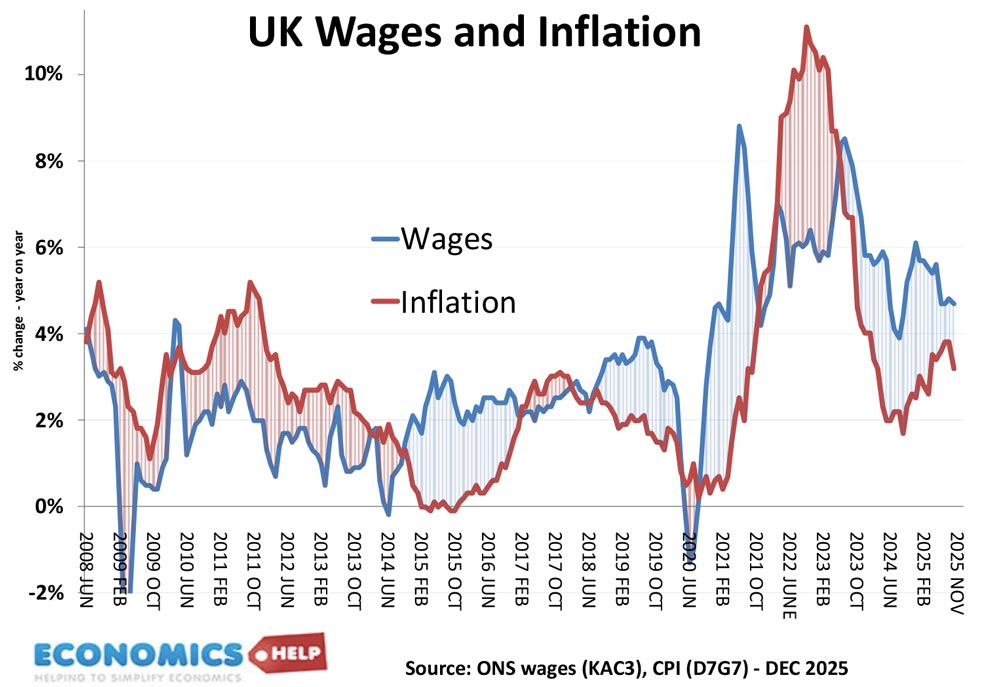
I thought he might tie state pension to minimum wage, but this is possibly more future proof.
3 Likes
I would have dropped the guaranteed 2.5%, to be honest.
I’m sure that the pensioners will moan like fuck about this, but ultimately they are still getting a better deal than anyone else gets.
3 Likes
Waiting for all those long-time Labour voters screaming out for a vision to come flooding in here.
Shouldn’t be too long, now.
2 Likes
what were the incarceration rates? as in a percentage of inmates of the general population?
purely stating there was crime, isnt evidence that harsher punishments werent a deterent.
i think crime itself is an industry aswell now, thinking of police budgets, specifically the law and court industry, and (not sure the following is relevant to UK?) privatised prisons…
now im no conspiracy theorist but… (here it comes) but im assuming alot of people make a lot less money if crime is significantly reduced…
The rates are not actually that different, depending on what baseline year you pick. 1880 was about 125 per 100k, today it is about 140.* But 1880 was coming off a period of growth in the prisoner population, and it actually began to move steadily downward through World War 2, falling in absolute terms as well as percentage. It began to grow again post-war, and has shot up since the early 90s. Perhaps not coincidentally, that is also when the UK began using privately-run prisons.
*There is a massive difference in sentences between the two periods, when you adjust the Victorian data to remove sentences of a few months which would not now be in a prison, it is closer to 80/100k
3 Likes
Delighted that the triple lock is being binned, it was economically illiterate. Burnham pretty much just secured my vote with that alone.
4 Likes
Someone help me out with the figures here.
I’ve seen it reported today that binning the triple lock could save £20-£40 billion a year.
Let’s say for example inflation is 3% (stop sniggering at the back). That renders the minimum 2.5% irrelevant. Let’s also say average wage increases are 6%. That’s a fairly generous estimate by most people’s standards.
Unless I’m missing something that means the state pension has to rise by an extra 3% under the triple lock. (the difference between rate of inflation and pay increases).
The maximum state pension is £241. 3% amounts to approx. £7.23. 6% amounts to approx. £14.46.
So the extra 3% means a pensioner on maximum state pension gets an extra £7.23 under the triple lock. That equates to £376 a year.
There are 13.2 million people receiving the state pension in the UK.
13.2 million people getting an extra £376 a year means an extra £4,963,200,000 a year. Less than £5 billion.
Given not every pensioner is on the maximum state pension and it is pretty unlikely there will be a difference of 3% between the rate of inflation and average pay rises I don’t see how there would be a saving of between £20 and £40 billion.
Could someone explain the maths?
The elephant in the room is the government lying about the rate of inflation. Last figure I saw was 2.8%.
You’d have to be out of your fucking mind to believe that.
1 Like
Why does it have to be a lie?
Can’t it simply be that the basket of goods and services they use to calculate a reference rate of inflation is simply different from what you experience?
4 Likes
In an ideal scenario we wouldn’t have to send people to prison because we have provided them the environment and opportunities to a live a life free of crime. However, I disagree that prison should just be reserved to people who are a danger to the public. Society shows us that if you give someone an inch they will take a mile, without no consequences for their actions they are just going to continue.
I am not suggesting we revert back to in humane conditions of the past, but there needs to be a tougher environment with a more productive rehabilitation scheme.
Regarding the Death penalty, it wasn’t applied to all crimes so it so cannot be used as a measure.
This isn’t the 60s, yes Prison will lead to people learning or making acquaintances but it is not as if they are meeting safe breakers. How many people have passed through Prison, how many of them have become master criminals?
Given that imprisonment is literally used by every country in the world and has been since the begining of Man kind, it is obvious that no one has come up with a better humane solution.
Well I would be surprised if anyone law abiding citizen saw Prison as anything other than a punishment, it is not a reward is it.
But Revenge? No! Justice, Yes!!
Could it not be seen as closure? Reassurance that someone who has affected their life in a negative way is now unable to.
Either way the system needs reviewing and with the issues society is currently facing it will only get worse.
1 Like
If your basket contains Fuel then it surely has to be questioned.
Fuel costs 25% more than it did last year, and inflated by 7.8% Petrol and 9.1% Diesel over the last month.
So, do you vote for a Government unwilling to lock people up for their crimes because justice costs £60k per male prisoner.
Could it be argued that people in prison are not a loss to society?
Under 18s are estimated at £300k per year probably because of safe guarding measures.
The UK spends £8.4bn annually on its Justice system, yet Criminality costs the Uk an estimated £78bn per year in overall Economic and Social damages from mainstream crimes. Surely that is a concern and something to consider.
They publish the formulae and their data. If you don’t trust it you can look it up and compare and compute it on your own.
3 Likes
It’s an average, though. If the high price of diesel is maintained, then it will have a knock on effect on everyone, because diesel is how goods get there in the first place.
The ONS does a personal inflation calculator. I would be interested to see how this compares for various scenarios. Does anyone not have a car on here?
Edit: I tried this based on my mother’s circumstances: low income elderly pensioner, no car, owns home, no holidays and little other entertainment spend other than cats. The inflation estimate came out at 2.5%.
4 Likes
From what I’ve read, I think those figures are based on where they expect it to be in the 2040’s.
Still seems like a bit of an over estimation though.
On the subject of maths, and I’m sure someone will correct me if I’m wrong.
Current annual state pension - £ 12,547.60
Increase at 2.5% - £313.69
New annual state pension - £12,861.29
Current tax free allowance- £12,570
Tax due on difference- £58.25
Actual amount pensioners will receive - £255.43
£255.43 x 13.2 million = £3.37 billion annually.
Regardless, those greedy fucking pensioners must be rubbing their hands deciding what to spend their 69p a day increase on
2 Likes
By 2040 there are estimated to be around 16 million pensioners.The estimates make huge assumptions about wage increases and inflation as well.
I think the calculation is based on annual growth increasing by 1.5% per annum. If wages are expected to grow by that in real teams whereas pensions are tied more into inflation then they will lag by that over time.
I think the new state pension will be around £14,000 pa in 2030. BY 2040 most people will be receiving that. The cost 0f pensions in 2030 is estimated to be £180 billion.
In real terms (i.e. excluding inflation from 2030) The pension will remain the same (although will rise slightly if inflation is low). Wages over that period at a compounded 1.5% growth would increase about 16%. 16 million pensions would come to £224 million. 16% of that would be £35 billion.
This all makes huge assumptions about what would happen over the next 15 years, but the estimate sounds plausible.
2 Likes
Do those figures and calculations factor in what effect compulsery Work Place Pensions having come in in the last 10 -ish years will have on the state pension?
I remember when they brought Superannuation (the equivilent of Work Place Pension) in Aus, it was done in phases to ensure those closer to retirement age never got screwed by not having super due to their working time not factoring it in. These days, state pension in Australia is almost non existant as the first thing a company does when you start is set up your Superannuation account, then you get the option to stay with that firm or move to your preferred choice.
It highly underrated food and drink increases for low income families who tend toward the cheapest products.
1% is laughable.
1 Like