But for North Indian dishes , the leaves (dried) are used to accentuate the flavour especially in tomato based gravy dishes where it cuts the acidity of the tomatoes.
For south Indian dishes , rhe seeds are basically used to aid in fermentation for the dosa and idly batters.
Ahh! So it is sweet. Is it really like maple in taste?
I know just saying maple doesn’t really mean much. I picked up on it on the stupid internet. I suppose they mean maple syrup. I’m not that familiar with that just had it on pancakes a few times.
Anyway an interesting plant. I’ll certainly look out for it when walking around the countryside.
Well done, it must have smelled amd tasted goegeous.
In the video, you add spices after you fried the onions for abit, cook abit and add tomatoes to make ‘the tomato masala base’ ( like a tomato sauce base).
That’s the sauce base for any curty, meat or vegetable.
Fry the Onions till almost golden, add ginger garlic paste and fry some more. Add Kashmiri Chilly Powder, Coriander Powder, Cumin Powder and Garam Masala and fry some more, the aim is to get a dark red colour for the gravy. Add the tomatoes (Can even be made into a paste in a food processor to quicken the cooking time) , Add crushed Dried Fenugreek at the end to balance out the flavours. Adjust salt, spice and heat levels at the end.
If making meat curries , Add the meat after adding the dry spices. Chicken needs atleast 15 minutes of Sauteeing prior to adding the tomatoes. The tomato paste needs about 5-6 minutes of cooking
Add a bit of water and simmer on low heat for a good 15 minutes till the oil starts floating to the top.
Sweet isn’t particularly the word i’d use. Maybe Savoury, Earthy and Bitter. It’s basically the indian equivalent to MSG. Guess you can say slightly sweet as well
Basic Google AI generated answer
Key details regarding kasuri methi and its umami profile:
Restaurant-Style Flavor: It is often the secret ingredient behind the rich, savory taste of restaurant-style (dhaba-style) North Indian dishes like butter chicken and paneer.
How to Use: Crush the dried leaves between your palms and add them towards the end of cooking to preserve their volatile oils and maximize aroma.
Umami Role: It works by balancing rich ingredients like ghee, cream, and tomatoes with a lingering, aromatic, and slightly sweet flavor.
Other Indian Umami: While a key player, it works alongside other savory, umami-rich ingredients in Indian cooking, including asafoetida (hing), ripe tomatoes, slow-cooked onions, and fermented ingredients.
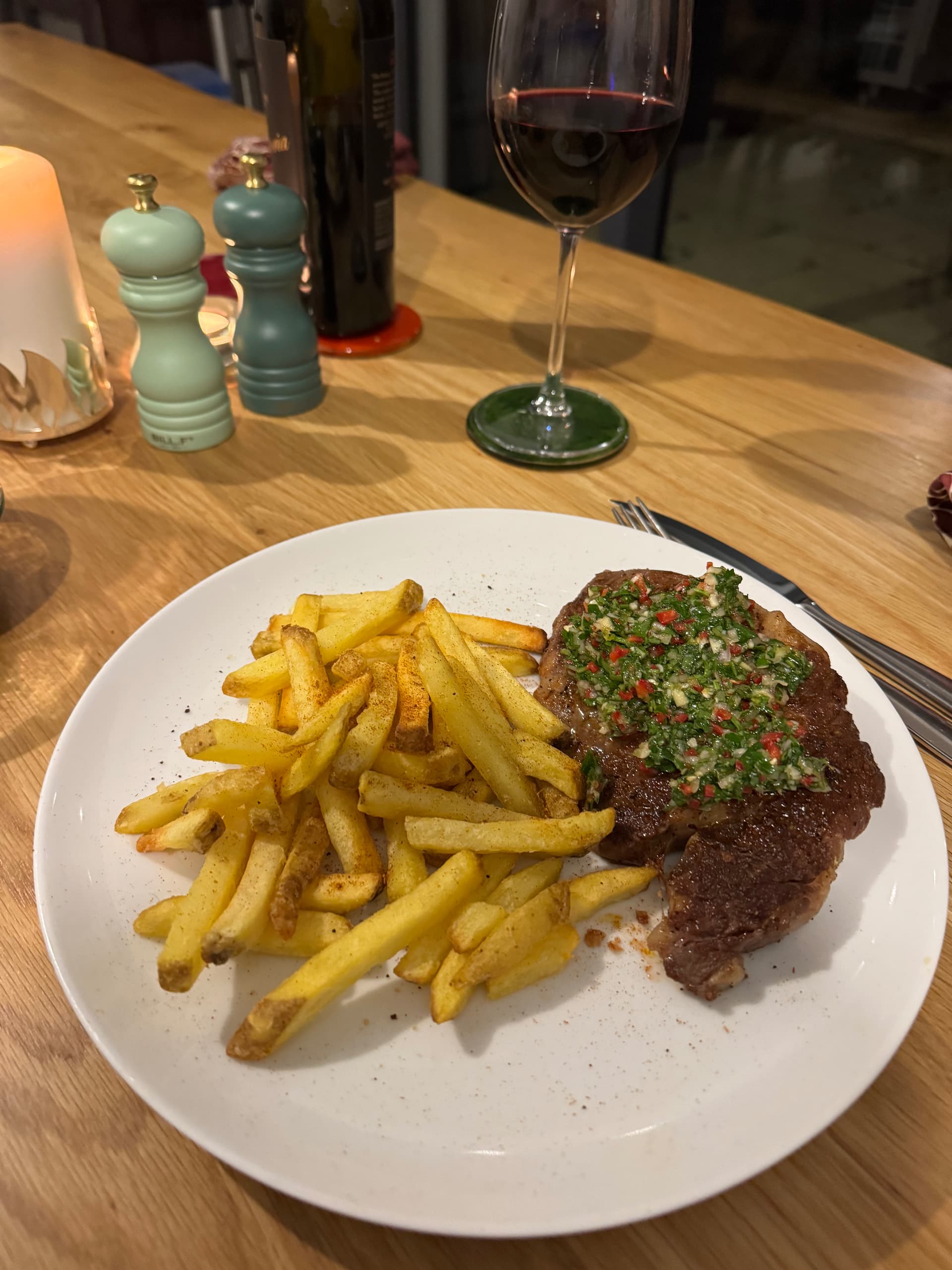
Did a steak frites and some chimichurri. And had to open wine even though I have to be up for work in the morning had to open wine after that disaster of a match.

 a few times.